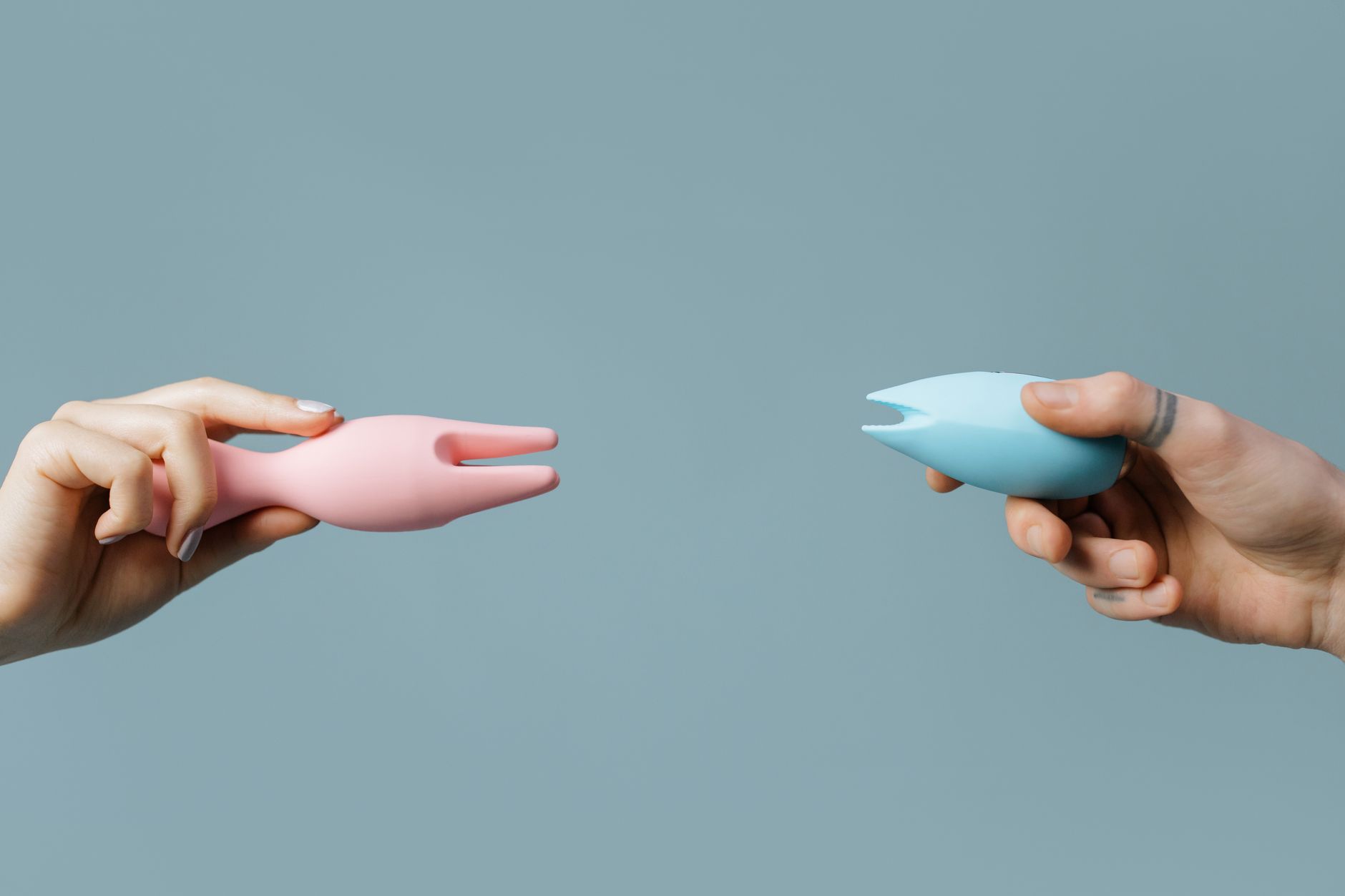
How to Use a Lemon Vibrator When Partner Initiates Sex Less Often Than You Desire
When your partner wants sex half as often as you do, a lemon clitoral vibrator becomes your honesty tool. Here's how to explore solo, communicate without resentment, and stop waiting for someone else to turn you on.
You want sex twice a week. Your partner wants it once every two weeks. Neither of you is wrong. Both of you are frustrated. And if you're reading this, you've probably already tried the conversations that go nowhere: the ones that end with "I'm just not in the mood as much," or worse, the ones that don't happen at all.
Here's what actually matters: desire mismatch is one of the most common friction points in long-term relationships, and it doesn't mean your relationship is broken. It means you need a different approach than waiting around hoping your partner suddenly wants you more.
A lemon clitoral vibrator like the Lem isn't about replacing your partner. It's about reclaiming your own pleasure, which is weirdly what makes couples sex better when it does happen.
When you're the higher-desire partner, something insidious happens. You start initiating less because rejection stings. You monitor their mood. You drop hints. You perform availability like it's your job. Then resentment builds quietly in the background, and by the time you actually talk about it, the conversation is loaded with hurt instead of honesty.
Your partner feels the pressure and pulls back more. You feel rejected and withdrawn. Six months later, you're sleeping in separate emotional universes.
The lemon adult toy isn't magic, but here's what it does: it lets you meet your own needs without making your partner responsible for your pleasure. That sounds simple until you realize how much of your sexual frustration is actually frustration at having delegated your satisfaction to someone else entirely.
Let's be clear on one thing right now: using a lemon vibrator by yourself when your partner isn't interested is not settling. It's not admitting defeat. It's actually one of the most powerful moves you can make in a desire-mismatch relationship.
Why? Because the moment you stop needing your partner to give you what you need, the dynamic shifts. You're no longer desperate. You're no longer performing. You're just a person who wants sex and meets that need. That's incredibly hot to most partners, even the low-desire ones.
Beyond that, regular solo pleasure with a lemon clitoral vibrator teaches you what actually works for your body. You learn your preferences, your timing, what gets you there fastest, what feels transcendent. Most of my clients come to this kind of exploration expecting it to be awkward. They're surprised to discover it's actually the best sex education they've ever had.
If you're new to lemon vibrators, the barrier isn't usually the tool itself. It's the shame around using it solo. That's worth examining, but not here. For now, assume it's fine. Because it is.
Start small and private. You don't need hours. Fifteen minutes of actual exploration, without pressure to come, teaches you more than months of passive wondering. Here's the actual process:
Set yourself up. Find a time when your partner won't interrupt. Phone on silent, door locked if that matters. You're not being secretive. You're creating space to pay attention. Bring water and lube. A water-based lube is essential with a lemon clitoral vibrator because it glides better and feels less aggressive on sensitive tissue.
Start at a low pattern. The Lem has multiple intensity levels. Begin at level one or two. You're not trying to come. You're mapping sensations. Notice what patterns feel good, where you prefer the stimulation, what rhythm your body wants.
Adjust based on real feedback. Unlike a partner who might assume you like what worked last time, you can pivot instantly. If one pattern feels mechanical, try another. If you want more pressure, increase it. This is data you're collecting about yourself.
Don't chase the orgasm. This is counterintuitive, but it matters. The moment you turn pleasure into a goal, it becomes effortful. Some sessions you'll come easily. Some you'll just enjoy the sensation. Both are complete experiences.
Try this once or twice before having any conversation with your partner. You're not gathering evidence. You're just learning your own baseline.
Here's where most desire-mismatch couples get stuck: they try to solve it by negotiating frequency. "Can we try once a week instead of every two weeks?" It doesn't work because desire isn't a compromise. You can't schedule lust.
Instead, separate the conversation into two parts.
Part one: "I've been frustrated because I want sex more than you do, and I've been making that your responsibility. That's not fair. I'm going to explore my own pleasure more, which means I'm not going to be resentful when you're not in the mood." That's it. You're not asking permission. You're not asking for anything. You're stating a boundary around your own wellbeing.
Part two: "When you do want sex, I want it to be genuinely good for both of us. What would make that more likely?" This isn't about frequency. It's about quality. Maybe your partner wants less pressure. Maybe they want more time to warm up. Maybe they want to initiate in a specific way. Listen to that.
The lemon sexual toy becomes part of your story now: "I've been using a vibrator solo, and it's helped me understand what I actually want. When we do have sex, I want to bring that knowledge into it." Most partners find that attractive, not threatening.
Here's the thing nobody tells you: solo exploration with a lemon clitoral vibrator doesn't replace partnered sex. It makes you better at it.
When you know your body, you can guide your partner. You can tell them what you want because you've actually experienced it. You come with less pressure because you're not desperately hoping this time it'll work. You're present because you're not performing. Your partner usually notices. A lot of them become more interested when the pressure lifts.
Some couples integrate it further. "Can I use the Lem during sex with you?" is a completely valid conversation. Some partners find it hot. Some find it helpful because it takes the pressure off them to provide all the stimulation.
But that's an option, not a requirement. The core work is just this: you meet your own needs, you stop resenting your partner for not being able to meet them completely, and you show up for couple sex as someone who's satisfied in their own right.
I've watched this pattern shift in hundreds of couples. The higher-desire partner starts exploring solo with tools like lemon vibrators. The lower-desire partner stops feeling hunted. Both people relax. And then, weirdly, the lower-desire partner often becomes more interested. Not because they suddenly changed their neurology. But because sex is no longer an obligation or a source of conflict. It's just something two people who like each other sometimes do.
It won't fix mismatches that run deep. If one person is asexual and the other isn't, you'll still need to have real conversations about what a sustainable relationship looks like for both of you. But those conversations become clearer and kinder when you're not exhausted from suppressing your own needs.
Regarding penetration versus external stimulation, if your higher desire for sex is partly about wanting more clitoral stimulation, a lemon clitoral vibrator solves that almost immediately. Solo or with a partner, the consistent, precise stimulation is something that's hard to replicate with hands or bodies. That's not a limitation. That's why the tool exists.
If your partner responds to solo exploration with jealousy, shame, or demands that you stop, that's a different conversation. That's about control. A good partner might feel initially insecure (and that's understandable), but they work through it because they care about your pleasure. If they don't, that's data about the relationship.
Similarly, if you've been exploring solo for a few months and your partner still shows zero interest in couple sex or in learning what you've discovered, you're dealing with a mismatch that might need professional support. That's when a couples therapist becomes valuable.
But here's what usually happens first: you give yourself permission. You explore. You discover. You communicate. Your partner feels the shift in your energy and responds to it. And suddenly the frequency mismatch matters less because the quality matters more.
Maybe at first. But the framing matters. You're not doing this instead of partnered sex. You're doing this because you deserve pleasure whether or not your partner's in the mood. When your partner sees that you're less resentful, less needy, and more confident about what you want, most become more attracted. The insecurity usually fades.
There's no rule. Some people go daily. Some go weekly. Some use it a few times a month and feel satisfied. Start with what feels natural and adjust from there. The goal isn't frequency. It's pleasure without pressure.
Yes, if they're open to it. Some low-desire partners actually prefer it because it takes pressure off them to provide all the stimulation. Others find it threatening. The conversation goes: "I want to try this during sex because I think it'll feel better for me. What do you think?" Then listen.
Not usually. Solo pleasure and partnered sex scratch different itches. Solo pleasure is about sensation and release. Couple sex is about connection and vulnerability. You might find you want less of it if the pressure drops, but most people still value it. The difference is you want it instead of needing it to survive.
That's a separate conversation. Some couples find it incredibly hot. Some people find it too exposing. Both are valid. If you want to try it, set a boundary first: "I'm comfortable with this, but I need to know it's about connection, not judgment." If your partner can't honor that, the answer is no.
Actually, the opposite. Once you know exactly what works for your body, you can communicate it clearly to your partner. You're not harder to please. You're just more specific. Most partners appreciate that clarity.
Desire mismatch feels like a math problem: if only we could get to the same number, everything would be fine. But it's not a math problem. It's a connection problem wrapped in a desire problem.
Exploring solo pleasure with a lemon vibrator won't make your partner suddenly want sex three times a week. But it will make you stop resenting them for not. And that shift in your energy, your availability, your confidence: that's often what actually changes the dynamic.
Start with yourself. Give yourself what you've been waiting for someone else to give you. Then see what happens in the space that opens up.