You're not losing your mind. Your brain is literally changing. The hormonal fluctuations of perimenopause don't just shift your cycle or your hot flashes. They rewire how your brain processes arousal, focus, and pleasure. You could be standing in front of your partner, genuinely attracted to them, and find that your brain is somewhere else entirely. Not somewhere better. Just... somewhere else.
The frustrating part? Your body still knows how to respond. Your clitoris hasn't forgotten anything. Your capacity for orgasm is intact. What's changed is the pathway from "I want this" to "my brain is actually here right now." And that gap feels enormous when you're living in it.
Let's talk about what's actually happening. Estrogen doesn't just drop during perimenopause. It fluctuates wildly. One week you might have levels that feel almost normal. The next week, they plummet. This inconsistency affects three systems that directly impact arousal.
First, your prefrontal cortex (the part of your brain that handles focus and sustained attention) becomes more sensitive to hormonal dips. So when estrogen drops, your ability to tune out the grocery list, your work email, or your kid's soccer schedule weakens. Your brain wants to wander, and it will.
Second, your dopamine and serotonin production fluctuates alongside estrogen. These neurotransmitters drive desire and the reward sensation of pleasure. When they dip, even activities that used to feel good feel flat. You're not depressed necessarily. You're just... meh.
Third, your nervous system becomes more reactive. You're faster to feel stressed, and a stressed nervous system actively suppresses arousal. Perimenopause turns you into someone who can't just flip a switch from "worrying about the budget" to "feeling sexy." The switch is broken for parts of each month.
Here's the distinction that changes everything. If you're experiencing brain fog arousal disruption, you're not actually losing desire. You're losing the ability to concentrate on it. This matters because it changes what fixes it.
If desire were gone, you'd need to rebuild it from scratch. That's a different project (and if that's what you're experiencing, how to use a lemon vibrator when desire returns after depression recovery might be a better place to start). But if you still want sex and still want orgasms, and your brain just refuses to stay present, then the solution is about training focus, not rebuilding attraction.
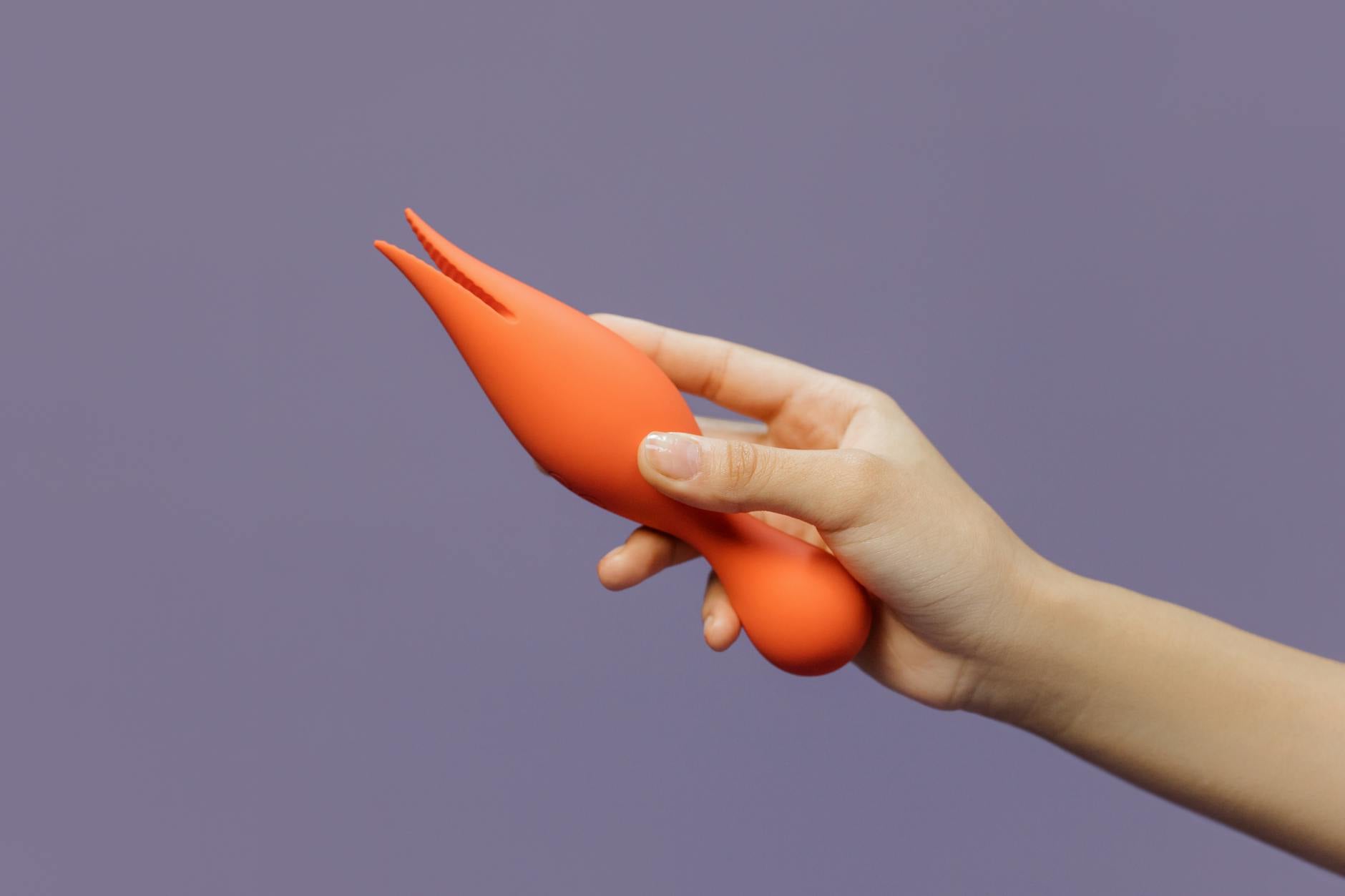
A lemon clitoral vibrator becomes your most useful tool here because it interrupts the brain fog loop. Air-suction technology (like the Lem) works by providing consistent, focused stimulation that gives your brain something so compelling it can't ignore it. You're not fighting brain fog. You're giving your attention a better place to land.
There's a reason I recommend lemon clitoral vibrators specifically when perimenopause brain fog is the culprit.
Traditional vibrators work through rapid vibration. That's effective, but it requires your brain to sustain focus on a distributed sensation. If your brain is already restless, a vibrator might just give it another moving target to not quite concentrate on.
Air-suction technology (the mechanism behind devices like the Lem) creates a rhythmic, focal point of sensation. The suction creates a seal around the clitoris and releases in a pulse. That rhythm is easier for a brain in brain fog to actually track. You're not chasing sensation. The sensation comes to you in a predictable pattern.
Second, suction toys produce a different neurological effect. They activate more of the touch and pressure nerves, which fire differently than vibration nerves. Those pressure nerves connect more directly to the reward centers in your brain. Translation: it feels more rewarding faster, which means you're more likely to stay present with it.
Third, lemon sucker toys tend to produce stronger orgasms in less time, which is crucial when brain fog makes sustained arousal difficult. You're not building toward an orgasm for 20 minutes and fighting distraction the whole time. You're getting to one in 5-8 minutes, which actually plays to your brain's strengths right now.
If you're using a lemon clitoral vibrator when perimenopause brain fog is killing arousal, here's what actually works.
Start by removing the pressure of performance or partnered timing. Brain fog makes you slower to warm up. You need time where the only goal is to observe what works. Solo is your best starting point because there's no one waiting, no expectation, and no worry that you're "taking too long."
Second, use environmental anchors. This is a neuroscience thing. Your brain focuses better when the setting is consistent and distinct. Pick a specific place and time when you typically use your lemon vibrator. Same bed. Same time of day if possible. Same ambient temperature and lighting. Your brain's pattern-recognition systems will start to prime arousal before you even pick up the toy.
Third, add a single focal object before you start. Light a candle. Put on one song you love. Choose one image on your phone that appeals to you. Your brain has limited focus bandwidth right now. Give it one thing to gently rest on while your body responds to the toy. This keeps your mind from spiraling into the work email.
Then start at a low intensity. Press the Lem to your clitoris at setting 1 or 2. Let yourself feel what's there without judgment. Your brain fog might still be present. That's okay. Give it 3-4 minutes at this intensity before you move up.
Increment the setting slowly. Move from 2 to 3. Stay for 2 minutes. Then to 4. The gradual buildup gives your brain time to synchronize with the sensation instead of fighting it. You're leading your attention along, not yanking it.
When you feel the edge of an orgasm approaching, stay there. Don't push through. Brain fog can actually make the orgasm less intense if you're still partially elsewhere. Linger at the edge. The sensation itself will eventually pull your focus fully present. Then let it happen.
If you're with a partner, the dynamic shifts but the core principle stays the same. Your partner needs to understand that your brain fog isn't about lack of attraction to them. It's a physiological shift, not an emotional one.
Talk about this before you're in bed. Tell your partner what you're experiencing. "My brain wanders even when I'm attracted to you. This isn't about you. I'm experimenting with tools to help me stay present." Most partners hear that as a relief, not rejection.
Then invite them to be present differently. Instead of trying to jointly build arousal (which splits your attention), use the lemon vibrator solo while they stay nearby. Let them read, touch you non-sexually, or simply be in the room. Many people find that their brain fog eases when they know someone they love is present but not demanding their focus.
Alternatively, have them use the lemon clitoral vibrator on you. This shifts the task to them. Your brain gets to relax into pure sensation without having to manage anything. This often works beautifully during perimenopause because you're not holding the "I need to be doing this right" story in your head.
If your partner has lower desire than you right now, read about how to use a lemon vibrator when your partner has lower sex drive. The brain fog piece and the desire mismatch often happen together during perimenopause, and they're separate problems requiring separate solutions.
One thing that makes perimenopause brain fog so maddening is that it's not constant. Some weeks your focus is relatively intact. Other weeks, you can't think your way out of a paper bag.
If you're still menstruating, try tracking which weeks brain fog peaks. For many people, it's worst in the days before bleeding when progesterone drops suddenly. During the first week of your cycle, when both estrogen and progesterone are low but steady, brain fog might actually ease.
This matters because it gives you a realistic plan. On high-fog weeks, don't expect sustained arousal or long sessions. Use your lemon vibrator on those weeks knowing you're working with your brain's actual capacity, not against it. Quick sessions, lower expectations, focus on the physical sensation rather than fantasy or mental engagement.
On lower-fog weeks, you might find you can actually build arousal in more traditional ways. You'll be surprised how much your ability to sustain attention shifts across the cycle.
Many people experience both brain fog and physical changes during perimenopause. Your tissues might be getting thinner, lubrication might be shifting, and your brain is simultaneously refusing to focus. This is the moment where a lemon sucker vibrator becomes genuinely life-changing because it addresses multiple problems at once.
The suction mechanism doesn't require the same sustained arousal as other toys. It doesn't need lubrication to work (though you can add water-based lube if you prefer). And it produces strong sensation quickly, which means your brain gets pulled into present-moment sensation before fog can fully take over.
If you're experiencing both layers, give yourself permission to use your lemon vibrator more frequently during perimenopause. This isn't overuse. This is meeting your body where it actually is right now.
How long does perimenopause brain fog usually last?
Brain fog typically starts in the perimenopausal years (usually 40s to early 50s) and can persist for several years. For most people, it peaks in the few years immediately before your final period, then gradually improves. Some people experience relief within months of reaching full menopause. Others take 1-2 years. It's frustratingly individual, but knowing it's temporary helps. You're not losing your mind permanently. Your brain is just in transition.
Can I use a lemon vibrator if I also have vaginal dryness from perimenopause?
Absolutely. In fact, this is one of the best combinations where a lemon clitoral vibrator shines. Suction toys don't require lubrication to function, which is different from friction-based vibrators. That said, adding water-based lube around the opening makes the whole experience more comfortable. It prevents any tugging sensation on sensitive tissue. Read more about managing lemon vibrator when you have vaginal dryness and lubrication issues.
Does using a lemon vibrator during brain fog make the brain fog worse?
No. In fact, the opposite. Regular pleasure and orgasm actually improve focus and cognitive function by boosting dopamine production. You're not making brain fog worse. You're potentially making it better. The key is using your lemon vibrator in a way that lets you stay present, which is why the slow intensity ramp matters.
What if I still can't focus even with a lemon vibrator?
That might signal that brain fog is more severe than typical perimenopause, or that another factor (like depression, anxiety, or SSRI use) is also at play. If you're on antidepressants, those can absolutely flatten arousal independently of perimenopause. Consider talking with your doctor about whether your current medication is the right fit. Sometimes a simple adjustment helps. If brain fog is accompanied by significant mood changes, memory issues, or anxiety, that's worth addressing directly rather than trying to work around it with a toy.
Is lemon clitoral vibrator better than other vibrators for brain fog arousal?
For this specific issue, yes. Air-suction lemon vibrators create focal, rhythmic sensation that's easier for a scattered brain to lock onto. They also produce stronger sensation faster, which helps pull your attention back into present-moment experience. That said, some people prefer other lemon sexual toys. The best vibrator is the one you'll actually use, so if you have another toy you love, start there. But if nothing else has worked during brain fog, the suction mechanism of a lem vibrator is worth trying.
Should I try hormone therapy before using a lemon vibrator for brain fog?
That's a conversation between you and your doctor. Hormone therapy can help some people with brain fog. It won't work for everyone and isn't right for everyone. Your lemon vibrator isn't either/or with hormone therapy. It's a tool that works whether you're on HT or not. Some people use both. Some use one or the other. What matters is finding what actually helps you feel more like yourself.
Perimenopause brain fog doesn't mean your arousal died. It means your brain got too loud. A lemon vibrator (the air-suction kind, specifically) gives your attention something so compelling it can't ignore it. You're not fighting your biology. You're working with it. Start slow, stay consistent, and give yourself permission to need tools right now that you didn't need five years ago. Your capacity for pleasure is still there. Sometimes it just needs a smarter pathway to reach it.