How to Use a Lemon Vibrator with Arthritis or Hand Pain
Joint pain doesn't end your sex life. Here's how to modify grip, positioning, and technique so you can enjoy a lemon clitoral vibrator without aggravating inflammation.
Let's be real: arthritis doesn't care about your sex life, which means your sex life has to care about arthritis. The good news is that a lemon vibrator is actually one of the most arthritis-friendly adult toys you can own because the suction mechanism does most of the work for you.
Unlike traditional vibrators that require sustained grip pressure or repetitive hand motion, the lemon's design shifts the physical load away from your fingers and wrists. That doesn't mean zero adjustment needed. It means smart positioning, modified grip, and sometimes asking for help. All of which are not just possible but genuinely pleasurable once you know the moves.
The lemon clitoral vibrator uses pulsing suction rather than vibration, which is significant if you have arthritis. Here's why:
Traditional vibrators require you to hold the toy steady against your body while the vibration motor does the work inside the device. If you have rheumatoid arthritis, osteoarthritis, or even just inflammation from overuse, that sustained grip can trigger pain in the hand, wrist, or forearm within minutes.
Suction-based stimulation, by contrast, creates gentle pressure and release. Once you position the lemon against your skin, the suction cups you in place. You're not fighting gravity or muscle fatigue to keep it there. The toy stays put on its own, which means your hand can rest in a neutral position instead of constantly gripping.
This is why so many people with arthritis report that the lemon feels less exhausting than other vibrators. You're not holding anything up.
Even though the lemon doesn't require constant pressure, you still need to hold it initially, position it, and control the settings. Here's the grip that protects your joints:
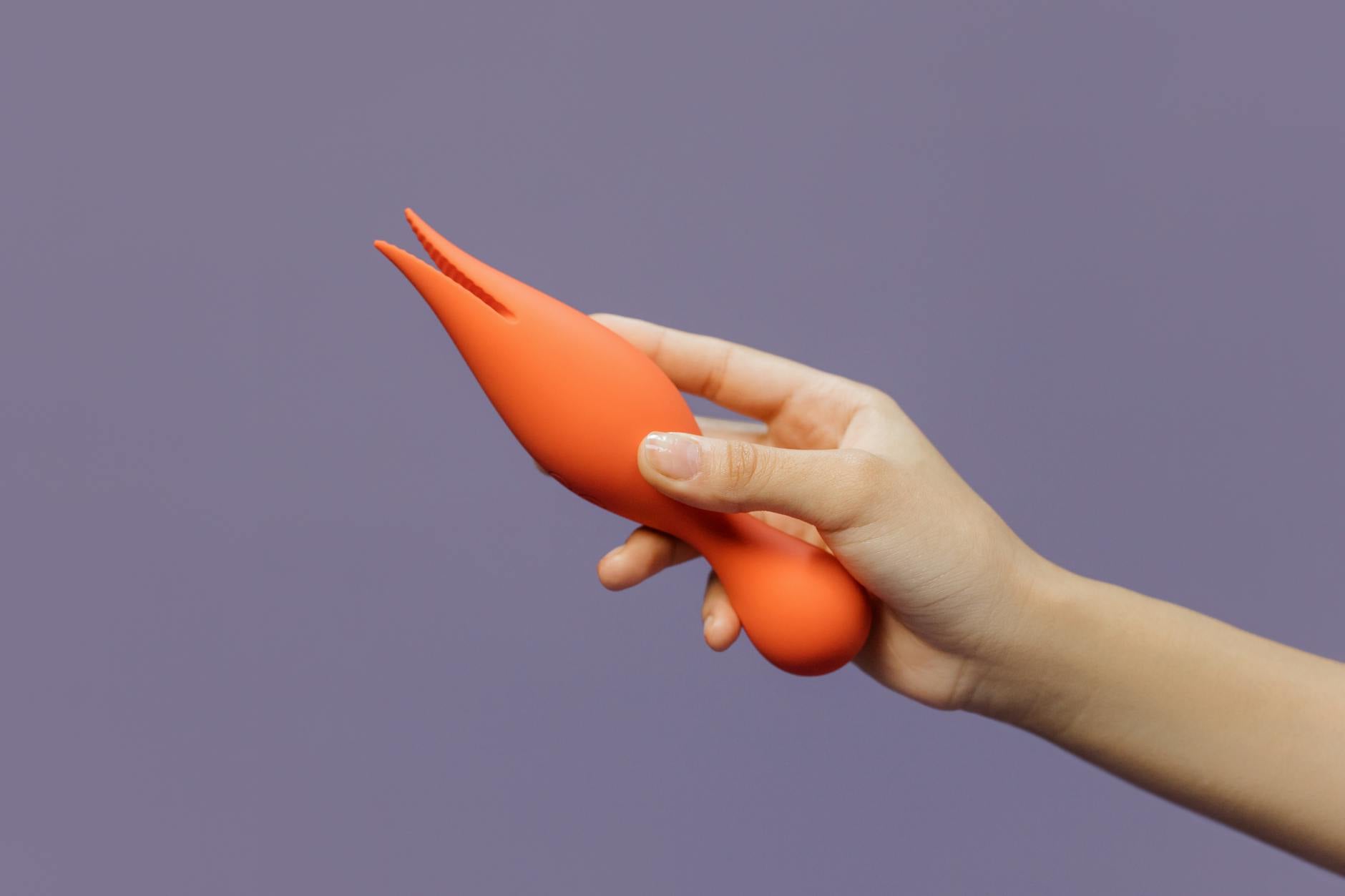
Use your palm instead of your fingers. Cradle the lemon in the base of your hand, letting the bulk of the toy rest against the heel of your palm and the area between your thumb and index finger. This distributes the weight across a wider surface and uses the stronger muscles of your hand and forearm instead of isolated finger joints.
Never grip with fingers. Pinching or holding the toy between your thumb and two fingers puts all the pressure on the smallest, most vulnerable joints in your hand. Skip this entirely.
Let gravity help. If you're using the lemon while lying down, rest your hand on your thigh or abdomen so the toy's weight is supported by your body, not your hand muscles. Your arm does almost nothing.
For standing or sitting positions, use your wrist in neutral. Avoid bending your wrist backward or forward. Keep it straight, as if you're in a handshake position. This takes load off the wrist joint where inflammation often concentrates.
The lemon's compact size actually helps here. It's not a long wand that puts leverage on your wrist. It's small enough to cradle without strain.
Once you've got the grip right, positioning matters for both pleasure and pain prevention.
Lying on your back is usually the easiest. Your arm can rest completely, and gravity supports the toy. You can rest your hand on your belly, thigh, or a pillow, which means zero active muscle engagement. Let the toy do the work. If your wrist feels tender, place a small pillow under your forearm to keep it elevated.
Seated with a wedge pillow. Sit propped up with a wedge or stack of pillows behind you. Lean back so your torso is at about 45 degrees. Rest your forearm on the pillow beside you, and guide the lemon from there. Your arm is supported the entire time.
Side-lying if you have a partner. Lie on your side while your partner holds the lemon. This completely removes hand and wrist engagement from the equation. Many couples find this actually deepens intimacy because you're not managing a toy while also managing pain.
Hands-free positioning with a small pillow. If you have a strong enough pelvic floor, you can actually position yourself so the lemon stays in place without hand support. Place a firm pillow under your lower back, adjust your position so the toy sits against your body without your hands, and let the suction hold it. This takes practice and isn't for everyone, but it's possible.
Using the lemon won't damage your joints, but preventing flare-ups around the experience makes it more enjoyable.
Ice or heat before, depending on your arthritis type. Osteoarthritis often responds better to heat; rheumatoid arthritis sometimes prefers cold. Do what your body usually wants, 15 minutes before. This reduces stiffness and improves circulation.
Gentle hand stretches before and after. Spend two minutes slowly extending and flexing your fingers, rotating your wrists, and gently stretching your forearm. This maintains mobility and prevents the "locked up" feeling that can happen after being in one position.
Anti-inflammatory timing. If you take ibuprofen or another anti-inflammatory for arthritis management, timing an intimate session a half hour after taking it means the medication is hitting peak effectiveness while you're enjoying yourself. Check with your doctor, but this is standard practice.
Limit session length. You don't need an hour. Twenty to thirty minutes is plenty, and it's actually better for concentration and pleasure anyway. Shorter sessions mean less strain and less risk of a flare-up the next day.
If you have a partner, their involvement can transform the experience. They can hold the toy, adjust the intensity, manage the controls, and respond to your cues in real time. This removes all hand strain from you and often increases intimacy because you're focusing on sensation and connection instead of managing equipment.
If you're solo and finding even the modified grip tiring, consider a toy stand or mounting system. Some people with severe arthritis use small suction-cup stands that hold the toy while they position themselves. It's unconventional, but it works.
You might also explore whether the lemon's lower intensity settings are actually more pleasurable for you. Pain and tension reduce arousal, so sometimes what feels best is also what's gentlest. The lemon has multiple suction levels, so you're not locked into intensity if it triggers joint awareness.
Arthritis can create a lot of grief around your body. You might feel like your joints have stolen something from you. Using the lemon differently doesn't erase that, but it can reframe it. You're not working around a limitation. You're using a tool designed to work with your body as it actually is.
That shift from "I have to modify because I'm broken" to "I'm choosing a position that works for me" is the actual game changer. Your pleasure isn't conditional on performing flexibility or strength. It's about sensation, presence, and what feels good right now.
Many people find that the gentler pace required by arthritis-modified use actually deepens the experience. You're not rushing. You're not in pain. You're just present.
Can I damage my joints by using a lemon vibrator? No. The lemon itself doesn't cause joint damage. Inflammation from overuse happens if you're gripping too hard or using poor positioning, which is why the modifications in this post matter. Used with proper technique, there's no risk.
What if I have severe hand arthritis and can't grip anything? A partner can hold the toy for you, or you can experiment with hands-free positioning. You might also explore mounting options. The lemon's design makes it one of the easiest toys to use without hand involvement.
Should I avoid the lemon if my arthritis is flaring? If you're in an acute flare, rest is usually better. But as inflammation settles, the lemon is often easier to use than other toys because the suction mechanism requires minimal grip strength. Wait until the worst has passed, then try the palm-grip position.
Do I need to modify my lemon routine if I take joint medications? Most joint medications don't affect sexual function, but some anti-inflammatory drugs can reduce genital sensation. If you notice this, chat with your doctor. You might benefit from the lemon's more intense suction settings, or you might find that adjusting timing helps.
Can arthritis medication make the lemon feel different? Some medications can affect sensation or lubrication, which might change how the lemon feels. If something changes, it's usually workable with adjustments to positioning, lubrication, or suction intensity. The lemon's adaptability is a huge advantage here.
Is it normal to feel tired after using a lemon vibrator with arthritis? If you're experiencing pain during use, yes, your body is exhausted from managing discomfort. That's your signal to adjust positioning or grip. If you're using the modifications in this post and still feeling drained, you might benefit from shorter sessions or a partner doing more of the physical work.
Arthritis is a genuinely limiting condition, and it's fair to grieve what it changes. But it doesn't have to change your sex life, especially with tools like the lemon that work with your body instead of against it. The right positioning, grip, and sometimes partner involvement make all the difference. Start with the palm-grip in a supported lying position, pay attention to what your joints are telling you, and adjust from there. Your pleasure is worth the small modifications, and your joints will thank you for using them wisely.