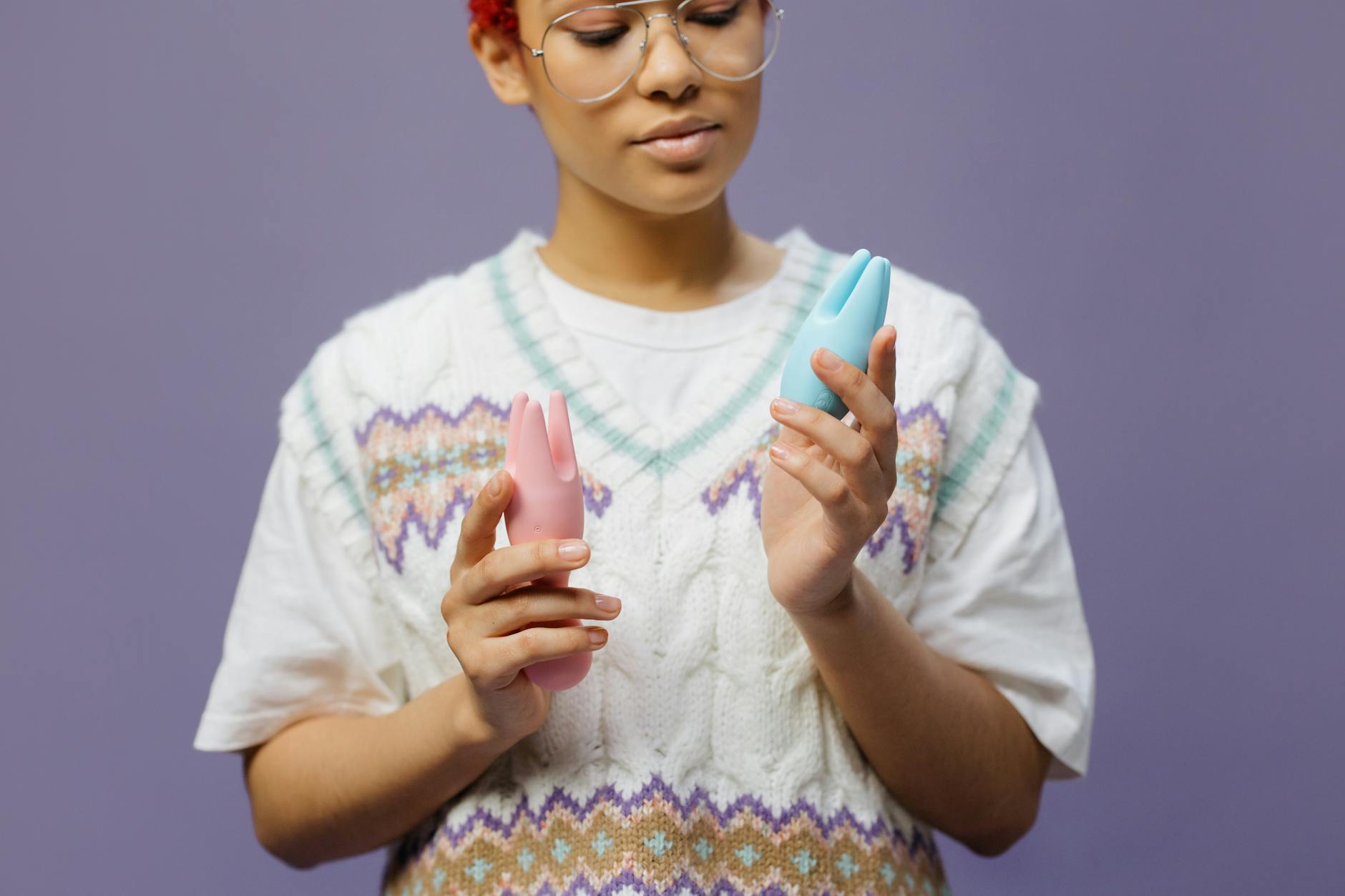
Hormonal shifts change how your body responds to stimulation, not whether it can. Here's what actually shifts, what stays the same, and why a lemon clitoral vibrator often works better through menopause than it did before.
Menopause changes pleasure. Full stop. But here's what it doesn't do: it doesn't erase it, and it doesn't make you broken. Most conversations about menopause and sex land in one of two useless places. Either everything is fine and nothing changes (false). Or everything dries up and desire vanishes (also false). Both miss the actual story.
Your body is shifting. The way stimulation feels is shifting. But your capacity for pleasure, your nerve density, your ability to orgasm intensely? Those are not going anywhere.
Estrogen drops. This is the headline everyone knows. What it means for sensation: tissues thin slightly, natural lubrication decreases, and blood flow patterns shift. Testosterone also drops (yes, people with ovaries produce it, and yes, it matters for desire). Your pelvic floor gets less structural support from estrogen, which changes how deep pressure feels and sometimes how orgasms register.
But here's the part that gets left out. None of this turns off the neural pathways for arousal. Your clitoral nerve endings stay intact. Your brain's reward system doesn't log out. What changes is the path to arrival, not the destination.
Many of my clients report that their most intense orgasms came after menopause, not before. That's not polite talk. That's consistent clinical observation.
If you've used clitoral vibrators before, you might have needed them at a particular intensity level. Post-menopause, something shifts. The lemon's suction-based mechanism becomes especially useful for a specific reason: it stimulates nerve endings without requiring the same degree of direct friction that your tissues now respond to differently.
Here's what I mean. Traditional vibration = direct mechanical stimulation. Suction = rhythmic pressure that engages tissue without the same wear on surface sensitivity. For someone navigating hormonal changes, that's often the better entry point. The lem vibrator uses air-pulse technology that many people find less numbing, less irritating to thinner tissue, and paradoxically more effective at triggering orgasm.
You're not restarting from scratch. You're recalibrating.
Warm-up time changes. Arousal builds more slowly. Budget 15 to 25 minutes of foreplay or solo exploration instead of five. This is not a penalty. Most of my clients find this shifts everything about the experience for the better. Slower anticipation often feels better than quick escalation.
Lubrication becomes essential. Not because your body is failing. Because thinner tissue benefits from it. Water-based lubricant is your friend here. Silicone lubes feel luxurious but can degrade silicone toys, so stick to water-based. This is a three-dollar fix that transforms how the lemon clitoral vibrator glides.
Start at lower intensity. The lem vibrator has multiple settings. Many people post-menopause find that patterns one through three offer more pleasure than jumping to five. You can always escalate. Tissue sensitivity is real, and working within it rather than against it makes the whole experience smoother.
Menopause often collides with other midlife shifts. Grown children. Relationship changes. Career pivots. Mortality thoughts. The temptation is to blame any shift in pleasure on hormones. Sometimes that's true. Often it's complicated.
If you're partnered, the most valuable thing you can do is separate two conversations. "My body responds differently now" is distinct from "I want us to reconnect." Conflating them turns both into dead ends. One is about physiology. The other is about desire and partnership. They need different solutions.
Solo exploration with a lemon vibrator during this transition can actually be clarifying. It tells you what your body is capable of right now, independent of performance pressure or partner expectations. Many people find that solo pleasure during menopause becomes more generous, less rushed, less concerned with proving anything.
If you're experiencing pain during sex or self-pleasure, don't normalize it. Genitourinary syndrome of menopause (GSM) is common, treatable, and worth addressing. A menopause-trained GP or gynecologist can prescribe topical estrogen creams with minimal systemic absorption. The shifts often happen in weeks.
If desire has completely vanished and isn't moving, testosterone therapy is worth a conversation with a specialist. It's prescribed more conservatively in some regions than others, but it's available and often reshapes the landscape for the right person.
The point: adjusting how you use a lemon vibrator handles most of the physical shifts. But sometimes tissue needs actual medical support. Getting that support is not a failure. It's information.
Some people report that their sensitivity decreases post-menopause. Others report it becomes more concentrated, more intense, or shifts to different areas altogether. The clitoris doesn't lose nerve density, but how that density registers can change. If you're someone whose pleasure used to live in the outer structures, you might find it's now deeper or more diffuse.
A lemon clitoral vibrator's suction mechanism is particularly useful here because it can be adjusted for depth and intensity. You're not locked into one type of stimulation. You can experiment with different parts of the device, different patterns, different speeds.
If you're exploring a lemon vibrator with a partner through menopause, the conversation is simpler than you think. "My body is responding differently, and I want us to figure out what feels good now" opens a door instead of closing one. Many couples find that this transition becomes a genuine reset. The pressure to perform the same way you did at 35 lifts. You get to build something new together.
Introducing the lem vibrator doesn't require an elaborate lead-up. It's a tool that addresses a physical shift. Framing it that way, rather than as a substitute for anything, keeps it grounded.
Menopause is not a deadline for pleasure. It's a transition. What's on the other side is often richer because the cognitive noise quiets down. The permission to prioritize your own sensation increases. The pressure to look a certain way or perform a certain way loosens.
Your lemon vibrator isn't becoming less useful. It's becoming useful in a different way. The lem vibrator, with its suction-based approach, often aligns better with what your body needs during this phase. That's not settling. That's working with what's actually true.
Your capacity for intense pleasure during menopause and beyond is not a question. It's a fact. The question is how you access it now.
You can keep using what worked before if it still feels good. But many people find that their tolerance for intensity changes. If your previous vibrator felt good at setting five, you might now prefer setting three. If it caused any numbness before, that effect might amplify. This is a good moment to experiment with something like a lemon vibrator that offers a different type of stimulation (suction rather than vibration) and adjustable intensity. The shift isn't mandatory, but it's worth exploring.
Yes. Thinner tissue during menopause benefits significantly from lubrication. It reduces friction, increases glide, and often makes the sensation feel more comfortable and more pleasurable. Water-based lubricant works best with silicone toys. A small amount goes a long way. Many people find that adding lube actually lets them feel the suction mechanism of the lem vibrator more clearly because they're not focusing on tissue discomfort.
Often, yes. Some people report that orgasms feel more concentrated or slightly shallower. Others report they feel more intense or spread across different areas. The variation is normal and doesn't indicate anything is wrong. Spending time with a lemon vibrator during this phase helps you understand what your specific orgasm landscape looks like now. That information is valuable.
Completely normal. Extended warm-up time is one of the most common shifts. Instead of five minutes of foreplay, you might need 20. This is not a loss. Many people find that slower arousal arc feels better, more sustainable, and leads to more intense orgasms. Building anticipation is a feature, not a bug.
Yes. Pain is not something to work around. Genitourinary syndrome of menopause (GSM) is common and highly treatable with topical estrogen, vaginal moisturizers, or other approaches. A few weeks of treatment often transforms the experience. There's no medal for suffering through it.
HRT can shift sensation as your hormone levels stabilize. Some people find that as estrogen increases, tissue thickness returns and sensitivity adjusts. Your preferences might shift again. That's information. Keep experimenting and adjust as you go. Your body is recalibrating, and your tools should recalibrate with it.
Menopause is the middle chapter of your sexual life, not the final one. The lemon vibrator, with its adjustable suction patterns and varied intensity options, often aligns better with what your body needs during this transition. That alignment is real. Your pleasure matters. Your body's shifts matter. And your capacity for intensity and satisfaction is not diminishing. It's changing shape.
If you want to explore what works best for you during this phase, start with <a href="/contact">reaching out to our team</a> or diving into our broader resources on sexual wellness. You deserve tools and information that match what's actually true about your body right now.