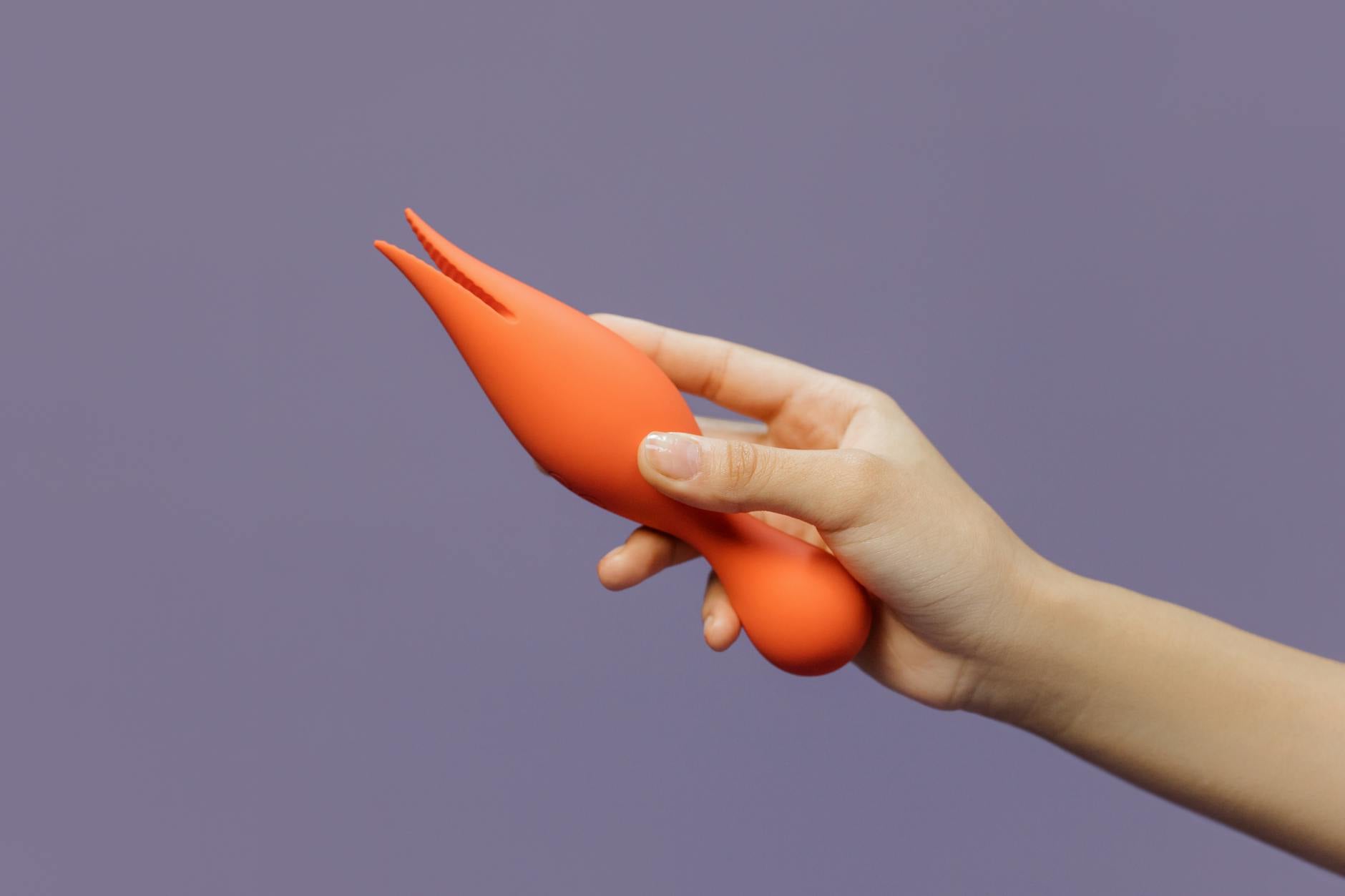
Lemon Vibrator for Anxiety and Stress Relief During Intimate Moments
Anxiety hijacks arousal. A lemon clitoral vibrator can anchor you back to your body when your mind won't stop racing, giving you permission to feel good again.
Anxiety doesn't just make you feel bad. It literally hijacks your nervous system and tells your body that pleasure is not the priority right now. Your mind is spinning through worst-case scenarios, checking your phone, replaying that awkward conversation from yesterday. Meanwhile, your body is supposed to relax enough to feel anything.
When you're anxious, your sympathetic nervous system is running the show. That's the fight-or-flight part of your brain. Blood flows away from your extremities and genitals and into your large muscle groups, preparing you to run or fight. Your heart rate spikes. Tunnel vision kicks in. Pleasure chemicals like dopamine and oxytocin get crowded out by cortisol and adrenaline.
This is brilliant if you're facing an actual threat. It's terrible if you're trying to have good sex.
The parasympathetic nervous system, the part that handles rest-and-digest, is basically offline. And that's where arousal lives. That's where relaxation, lubrication, sensitivity, and orgasm all happen.
The fix is not to think more positively or to "just relax." That's like telling someone with insomnia to stop thinking about sleeping. The fix is to give your body a signal strong enough to override the anxiety and pull your nervous system back toward parasympathetic mode.
This is where a lemon clitoral vibrator becomes genuinely useful.
A lemon vibrator, especially the suction-based models, works differently than regular vibrators. Instead of broad, diffuse vibration across a large surface area, suction creates intense, localized stimulation on the clitoris. That concentration of sensation does something important: it gives your brain something so specific to focus on that it crowds out the anxiety spiral.
You can't worry about your email and feel intense clitoral suction at the same time. Your brain doesn't have the bandwidth for both. This isn't distraction in a bad way. It's redirection. You're pulling your attention from your thoughts and back into your body where sensation actually lives.
The other part that works: the ritual. Taking time, setting aside your phone, choosing a comfortable position, deliberately turning something on for yourself. That sequence signals to your nervous system that you're safe and that pleasure is allowed right now. It's permission in physical form.
If anxiety is your main issue, I recommend lower intensity at first, not higher. Start with the Lem on pattern 1 or 2. You're not trying to force an orgasm. You're trying to teach your nervous system that this is safe and good.
Three things that help most people:
Low intensity, longer duration. Set a timer for 20-30 minutes if you can. Anxiety needs time to settle. The first 10 minutes might be your brain arguing with you. By minute 15, something shifts. Your body starts to recognize the signal and slowly, gradually, switches into parasympathetic mode. Orgasm might not happen, and that's completely fine. The win is the shift in your nervous system.
Alone time first. If you have a partner, practice this solo until you're comfortable. There's a specific anxiety that comes with "performing" or worrying about being judged. Get familiar with how your body responds without that layer. Then you can bring your partner in once you know the territory.
No expectations, no timer pressure. This is the opposite of goal-oriented sex. You're not trying to come in 15 minutes. You're not trying to come at all. You're just exploring what happens when you stay present with sensation for as long as you want. Some days you'll come. Some days you won't. Both are okay.
If you're anxious, lying flat on your back can sometimes make it worse. You're staring at the ceiling, or at your own body, and your mind has space to wander. Instead, try sitting upright or semi-reclined, propped on pillows. This does two things. One: it's less vulnerable-feeling, which helps some people relax. Two: you can see what's happening, which reduces the fear of the unknown.
Some people find that having soft music or a podcast in the background helps. The gentle noise takes up mental space that anxiety would otherwise fill. It's not distraction. It's signal management.
Sometimes, even with the vibrator on, anxiety can spike. You notice your chest tightening or your mind spinning again. This is where grounding comes in.
Try the 5-4-3-2-1 technique: notice 5 things you can see, 4 you can touch, 3 you can hear, 2 you can smell, 1 you can taste. Pair this with the vibrator. You're running stimulation while you ground yourself. It's a one-two punch that tells your nervous system: you're safe, you're here, you're okay.
Or try box breathing. Breathe in for 4 counts, hold for 4, breathe out for 4, hold for 4. Repeat 5-10 times. Then turn the vibrator back on. The breathing first settles your nervous system enough to feel sensation.
Once you've practiced solo and you're comfortable, bringing a partner in changes the dynamic. The anxiety becomes different: less "Can I feel anything" and more "Is this weird? Am I taking too long? Is my partner bored?"
Talk about it first, when you're not in the moment. Say something like: "I get anxious sometimes during sex, and it shuts down my pleasure. I want to use a lemon vibrator to help me stay present. I'd love for you to just... be there. No pressure to do anything specific. Sometimes I'll want touch, sometimes I won't. I'll tell you."
The best partner role is witnessing, not performing. They're there to keep you company, not to fix you or make it work.
Using a lemon clitoral vibrator for anxiety is not a replacement for therapy or medication. It's a tool. And it works best when you're also managing anxiety in other ways: movement, sleep, talking to someone, maybe meds if that fits your life.
Think of it this way. If anxiety is a fire, therapy and medication are the systems that lower the heat. A lemon vibrator is what you do once the heat is manageable. It's the practice of being present in your body, of feeling pleasure even when your mind is used to bracing for the worst.
Over time, this practice actually changes your nervous system's baseline. You're building evidence that your body is safe. That pleasure is accessible. That you deserve it even on days when your brain is being difficult.
Yes. Some medications can blunt sensation or lower desire, but that's different from addressing the root nervous system dysregulation. If medication is making sensation harder to find, a more focused stimulation tool like a lemon sucker can actually help you access feeling that might be there but harder to reach. If you're struggling, talk to your prescriber. Often it's a dosage or timing question.
Then that's not the goal. The goal is to spend 20-30 minutes in your body instead of in your head. Orgasm might show up, or it might not. Both are wins when you're learning to calm your nervous system. The real measure of success is: do you feel more relaxed at the end? More present? That's the point.
Absolutely. You don't have to frame it as sexual at all. It's sensory grounding. Some people use it that way specifically to avoid the performance pressure. Turn it on, sit with the sensation, breathe. No sex required.
As often as feels good. Some people use it daily for 15-20 minutes. Some use it a few times a week. There's no overuse risk with a lemon clitoral vibrator the way there might be with desensitization. You're not chasing bigger sensation. You're practicing presence. Go as often as you need to.
Yes, completely normal. You're doing something new. Your nervous system might resist because new things feel risky. Stick with it. Try it 3-4 times before deciding it's not working. By the third time, your body usually starts to recognize the pattern and relax into it.
This can be really beautiful. Take turns. Don't make it about performance or orgasm. Make it about witnessing each other in a relaxed, present state. Use it as a way to reconnect when you've both been stressed. Some couples find that sharing this tool actually deepens their intimacy because it takes the pressure off sex and makes room for presence instead.
Anxiety convinces you that your body is broken. That you're too stressed to feel anything. That everyone else gets this and you don't. None of that is true. Your body just needs a signal strong and clear enough to pull it out of fight-or-flight and back into rest-and-digest.
A lemon vibrator gives you that signal. Not because it's magic. Because focused, intense sensation is one of the fastest ways to bring a scattered nervous system back to the present moment.
You're not broken. Your nervous system is just doing its job a little too well. And you have the power to retrain it.
If you're interested in exploring this further or have questions about how to get started, reach out at /contact. We're here to support your journey back to pleasure.