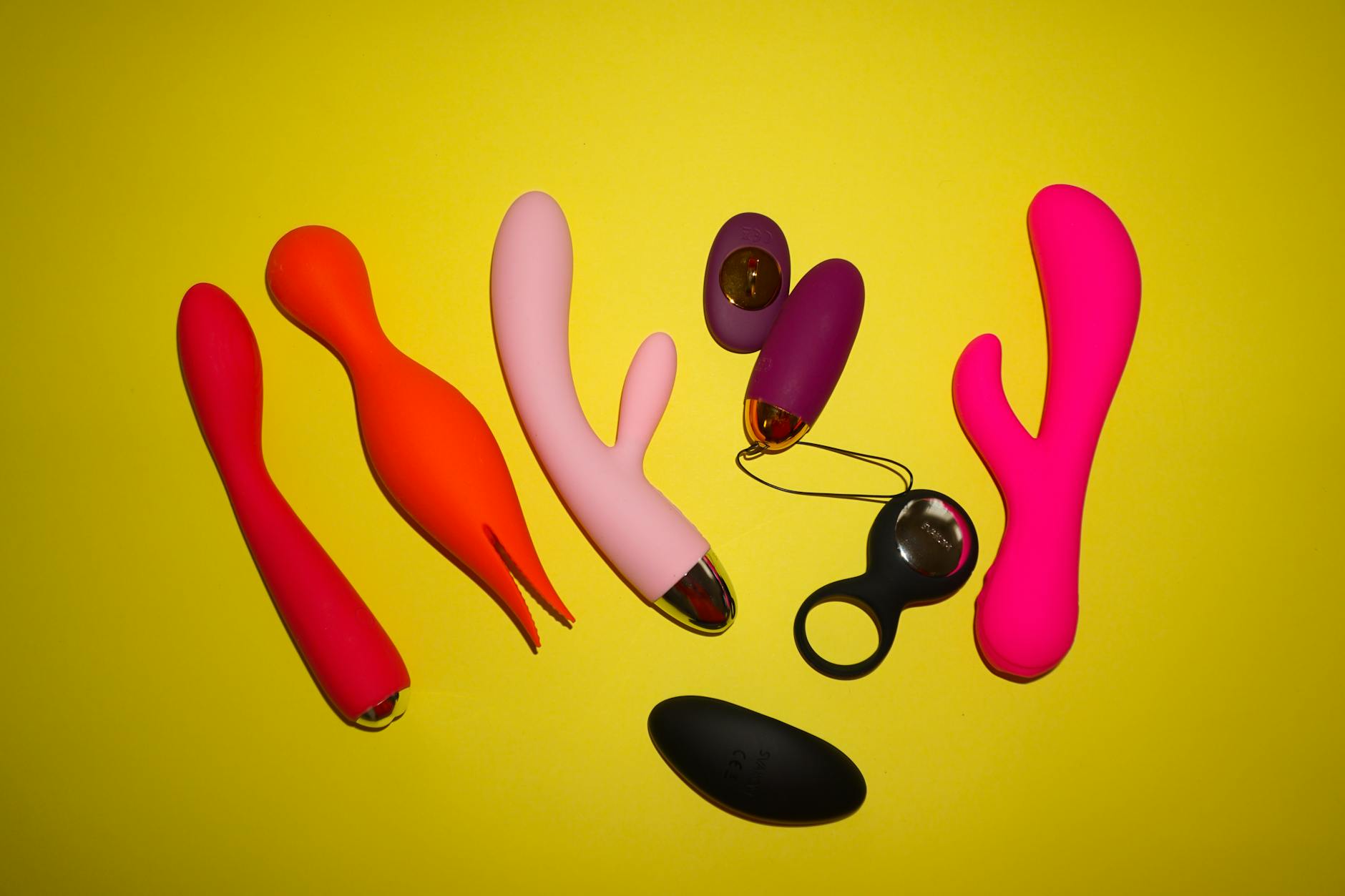
Lemon Vibrator for Couples with Mismatched Sexual Desire Levels
One partner wants sex three times a week. The other wants it three times a month. Here's how a clitoral vibrator bridges that gap without pressure, resentment, or compromise.
Mismatched desire isn't a relationship problem. It's a relationship reality. Studies show roughly 40 percent of long-term couples struggle with desire differences, and the gap only widens as relationships age. But instead of treating it as normal, most couples treat it like a failure, a sign that something is broken.
When one partner wants sex significantly more than the other, three things happen simultaneously. The higher-desire partner feels rejected. The lower-desire partner feels pressured. And both partners start viewing sex as an either/or transaction rather than something that could work for both of them.
Here's the neurobiology: the person who initiates most bears the emotional weight of rejection. Each "not tonight" compounds, and soon they stop asking altogether. Meanwhile, the lower-desire partner begins associating sex with guilt and obligation rather than pleasure. Sex becomes a conflict topic instead of an intimacy tool.
A lemon vibrator doesn't solve desire mismatch. But it can completely reshape the conversation around it.
Let me be direct. The most common mismatched-desire scenario involves a vulva owner with lower desire and a partner who wants sex more frequently. This is largely because penetrative sex is often framed as the only "real" sex, and it takes longer, requires more setup, and feels more like a performance.
A clitoral vibrator like the Lem flips that dynamic. Clitoral pleasure is fast, reliable, and doesn't require arousal to begin with. Many people discover they enjoy pleasure without necessarily wanting the full package of partnered sex. That's not rejection of your partner. It's clarity about what they actually want.
For the higher-desire partner, this means getting to experience pleasure and connection with their partner on a timeline that works. For the lower-desire partner, it removes the pressure of a 30-minute encounter when they have 15 minutes of actual interest.
Don't hand your partner a vibrator and expect good results. Seriously.
Start with honesty. Say something like: "I've noticed we want sex at different frequencies, and I think that's created tension between us. I don't want you to feel pressured, and I don't want to feel rejected. I've been thinking about what could work for both of us, and I want to talk about it."
Note what you didn't do. You didn't blame. You didn't suggest the vibrator is a replacement for partnered sex or that it's a bandage for a broken desire. You framed it as a conversation about how you both experience pleasure, not as a fix for what's wrong.
If your partner is defensive, that's information. It might mean they're worried the vibrator is a sign you don't want them anymore. It might mean they have shame around their own lower desire. Name that directly. "I love you and I want to be close. I just want that closeness to look different sometimes."
Option 1: Solo with presence. Your partner uses the Lem while you're in the same room. You're not performing. You're present. You might touch them, or hold them, or just be there. This keeps physical connection without requiring penetrative sex or prolonged arousal. Many couples find this a gateway back to feeling close without the pressure.
Option 2: Complementary pleasure. You have sex or manual stimulation while your partner uses the vibrator. This works beautifully when desires are out of sync because you're both getting pleasure simultaneously, neither person is waiting around, and the experience feels mutual.
Option 3: Foreplay acceleration. The lower-desire partner uses a lemon vibrator first to reach orgasm, then you move into partnered sex if they want to. This removes the guilt of "I only want this for 10 minutes" and makes the entire encounter feel less obligatory.
Whichever you choose, the first time will probably feel awkward. That's fine. Talk through it after. Ask: "What felt good? What didn't? Want to try something different next time?" This is how you rebuild sex as collaboration instead of conflict.
Here's what surprised many couples I've worked with. The higher-desire partner often relaxes once they feel they're getting physical connection more regularly. They stop initiating with an edge of desperation. They feel less resentful.
For some, watching their partner experience reliable pleasure is genuinely arousing. The performance pressure lifts on both sides. And when a couple isn't spending emotional energy on desire conflict, they often find more desire naturally appears.
It's not magic. It's math. Less resentment equals more openness equals more sex, paradoxically.
I could write 10,000 words on lemon vibrator technique. But honestly, the mechanism matters less than the message.
Using a clitoral vibrator together says: "Your pleasure is not secondary. Your timeline matters. We can stay close even when we want different things." That's the real shift.
Many couples who get stuck in desire mismatch are stuck because they believe there's only one way to have sex that "counts." A lemon vibrator like the Lem says that's not true. Pleasure is pleasure. Connection is connection. There's room for your different desires in the same relationship.
If you're starting this conversation with your partner, go slow. If they're resistant, that's worth exploring separately. Sometimes lower desire is about the relationship. Sometimes it's medical, hormonal, or circumstantial. A vibrator addresses the first. You might need a therapist for the others.
But if the core issue is simply "we want sex at different frequencies," a clitoral vibrator can genuinely help you find a rhythm that works for both of you.
It can, if you frame it that way. This is entirely about the conversation. If you introduce it as "I want this instead of you," yes, that stings. If you frame it as "I want to stay close with you in different ways," it feels collaborative. The vibrator isn't replacing them. It's expanding what you do together.
That reaction usually points to insecurity or shame, not actual harm. Ask what they're worried about. Often it's "Does this mean you don't want me?" or "Am I not doing this right?" Both are fair feelings to address. You might say: "I want this because my body works this way, not because you're doing anything wrong. I still want you. This is just different."
Completely. In fact, that's one of the major benefits. If one partner needs intense clitoral suction to reach orgasm and the other is more sensitive, a vibrator gives you separate experiences happening simultaneously. You're not waiting for them to catch up or feeling guilty for being faster.
There's no formula. Some couples use it multiple times a week. Others use it occasionally. The point isn't frequency. It's that you have a tool that works when your desires don't align. If your higher-desire partner wants sex and your lower-desire partner has 20 minutes, the Lem makes that 20 minutes feel complete rather than rushed.
Talk about what "left out" means. Are you worried about being replaced? Are you feeling like you should be able to do what the vibrator does? Are you bored? Those are three completely different problems with three completely different solutions. A vibrator isn't meant to make you redundant. It's meant to give you more options.
No. It's a sign you're paying attention to what actually works. Some couples use vibrators for decades. Some use them for a season. Using a tool isn't failure. Pretending you don't need one and letting resentment build is.
Mismatched desire is one of the most common relationship challenges, and also one of the least talked about. Couples hide it out of shame, thinking it means the relationship is broken. But broken relationships don't care enough to solve problems. Healthy ones do.
A lemon clitoral vibrator won't make you want sex at the same frequency. But it might make you stop treating different desires like a conflict. And that shift, honestly, changes everything.
If you're navigating desire mismatch right now, start with the conversation. Everything else follows from there. And if you want help thinking through how to reconnect as a couple, we're here.