Lemon Vibrator When Estrogen Levels Drop During Perimenopause
Let's be real: perimenopause is not menopause. But it feels like someone turned down the volume on your body without telling you the remote control changed hands.
Science
Your body starts changing years before menopause officially arrives. Here's why sensation shifts, what that means for pleasure, and how lemon suction vibrators handle the transition.
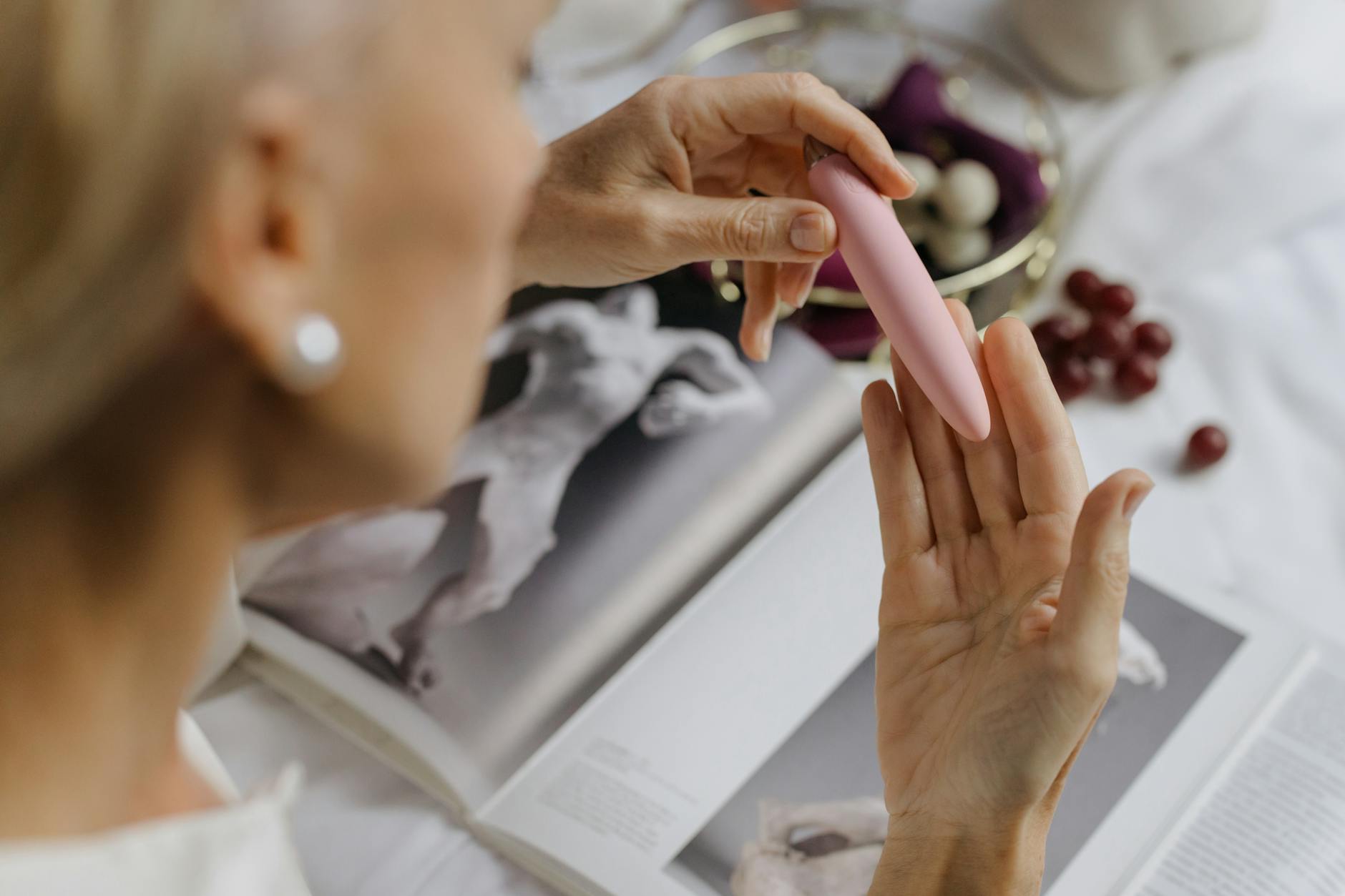
Let's be real: perimenopause is not menopause. But it feels like someone turned down the volume on your body without telling you the remote control changed hands.
Estrogen doesn't plummet overnight. It drops and rises and drops again for years, sometimes a full decade before your period actually stops. During this time, your clitoris gets less blood flow, your tissue thins slightly, and the speed at which your nervous system lights up during arousal shifts. Not stops. Shifts. But if you're used to your body responding a certain way, a shift feels like loss.
That's where understanding how a lemon clitoral vibrator works during perimenopause becomes genuinely useful.
Here's what actually happens physiologically in perimenopause. Estrogen levels begin a slow decline, usually starting in your 40s, sometimes earlier. This isn't a straight line downward. Your hormones fluctuate wildly. Some months you'll feel like your 30-year-old self. Other months, arousal takes twice as long to build, and your tissues feel less plump and responsive.
This inconsistency confuses people more than consistent change ever would. You can't adjust to something that keeps changing. You can't say "okay, this is just how it is now" when sometimes it isn't.
Estrogen directly affects blood flow to the clitoris and vaginal tissue. It also maintains the thickness of the clitoral hood and labia. As estrogen drops, these tissues thin slightly. The clitoral nerve endings are still there. They're not going anywhere. But the cushioning around them changes, which can make direct stimulation feel intense or uncomfortable instead of pleasurable.
During perimenopause, arousal doesn't disappear. It reorganizes. Your brain's response to stimulation remains intact. Your desire doesn't evaporate. What changes is the scaffolding. Think of it like the wiring's still good, but the walls around it are thinner.
This means three things happen to sensation:
First, it takes longer to reach arousal. Your nervous system needs more time to activate and build tension. If you're used to fifteen-minute foreplay leading to orgasm, you might now need twenty or thirty. This isn't dysfunction. It's just the pace your body is working at right now.
Second, direct pressure becomes less comfortable. Thinning tissue under the clitoral hood means the same intensity of stimulation that felt great at thirty-five might feel like too much at forty-five. This is why many people discover that lemon suction vibrators, which work by gentle suction rather than direct vibration, feel better during perimenopause than traditional vibrators.
Third, your orgasmic pathway changes shape. You might orgasm more easily in certain positions, require different kinds of stimulation, or need mental focus in ways you didn't before. Again, not worse. Different.
A lemon vibrator uses suction and gentle pulse patterns, not direct friction. This matters during perimenopause because it respects the tissue changes without working around them.
With a traditional vibrator, you're creating friction against tissue that's becoming more sensitive to pressure. The lemon clitoral vibrator's suction mechanism works differently. It creates a gentle vacuum seal around the clitoris, stimulating the thousands of nerve endings via suction rather than vibration. This approach distributes stimulation more broadly across the sensitive area rather than concentrating pressure at a single point.
For people in perimenopause, this usually means lower settings on the lemon vibrator feel more pleasurable than they would have in previous years. Many of my clients find that settings two or three on the Lemon (rather than five or six, as they preferred before) create more satisfying sensations. There's no reduction in pleasure. It's a recalibration.
The other advantage of lemon suction technology is consistency. Suction patterns are stable and predictable. They don't rely on your body's arousal state to feel good. A traditional vibrator sometimes requires your nervous system to be "ramped up" before it hits right. Lemon suction works whether you're halfway to arousal or fully primed.
Estrogen maintains vaginal lubrication. As it drops, natural lubrication decreases. This isn't because something's wrong with you. It's a straightforward physiological fact.
Water-based lubricant becomes a tool rather than optional. Use it generously, especially with a lemon vibrator. The suction mechanism creates a seal, and lube helps maintain comfort and sensation during that seal. Without it, the suction can feel more intense than intended. With it, everything softens into the right texture.
Reapply lube midway through if you're having a longer session. Your body isn't going to produce more as you go. That's not a sign to stop. It's a sign to add more lube.
One of the biggest shifts is pacing. Your foreplay timeline extends. That's not sad. It's actually useful information. Many people discover that they enjoy longer arousal phases once they stop rushing them. The buildup becomes part of the pleasure instead of a means to an end.
Honestly? Some of the most satisfying sex during perimenopause involves using a lemon clitoral vibrator with deliberate slowness. Start with setting one or two. Let arousal build over ten, fifteen, twenty minutes. Your nervous system is rewiring itself right now anyway. The slow burn can become its own thing.
Mental focus matters more during perimenopause. Distractions (stress, interruptions, self-consciousness) become louder. Creating space and mental quiet around pleasure becomes active work instead of something that happens automatically. That's not failure. It's just where your physiology is. Acknowledge it.
If you're having sex with a partner during perimenopause, the clearest conversation you can have is this: "My body's rhythm is shifting, and I want us to figure out what that means together."
Don't frame it as something that's wrong with you. Don't apologize for needing longer arousal time or different stimulation. Your body's shifting because estrogen is biochemically dropping. That's not a personal failing.
Many couples discover that using a lemon vibrator together during perimenopause actually deepens connection. You're not trying to hide the change or push through it. You're engaging with it directly.
If sensation changes dramatically (sudden numbness, pain that wasn't there before, intense itching), bring it up with your GP. Sometimes those changes are purely hormonal. Sometimes they're something else. You deserve accurate information.
If you're interested in hormone therapy or other support during perimenopause, that's a conversation worth having with a menopause-trained doctor. Not everyone needs or wants it. But it's worth understanding what's available.
Here's what I recommend for people navigating perimenopause with a lemon suction vibrator:
Set aside time that's not rushed. You need it for arousal. Start at a lower setting than you used before. You can always increase it. Add water-based lube generously. Reapply halfway through. Use your hand or your partner's touch during warm-up. The lemon clitoral vibrator is enhancement, not the entire scene. Let your body take the time it needs.
Your pleasure isn't disappearing during perimenopause. It's reorganizing. That reorganization is worth paying attention to, not ignoring. Once you understand the new architecture, the satisfaction often deepens.
Yes, because suction stimulation can activate sensation without requiring your body to be in a high state of arousal first. A traditional vibrator sometimes needs your nervous system already ramped up to feel right. Lemon suction works at any arousal level. That said, you still need time and mental space for arousal to build. The vibrator is a tool that works within that timeline, not something that rushes it along.
No. Overuse can lead to temporary desensitization with any vibrator, but that's about frequency and intensity, not about the vibrator itself. During perimenopause, your tissues are already changing. Using a vibrator as directed won't accelerate that. If you're concerned about building tolerance, rotate between lemon vibrator sessions and manual stimulation, and take occasional breaks.
Actually the opposite. Slower arousal usually means lower settings feel better. Your tissue sensitivity is increasing relative to pressure. A setting that felt gentle before might feel intense now. Start lower than you think you need. You can increase it, but most people find they enjoy perimenopause sex more when they slow down and lower the intensity rather than cranking up to compensate.
Vaginal dryness is a symptom that can appear during perimenopause, but it's not the only cause. Stress, certain medications, antihistamines, and other factors cause dryness too. If you're experiencing dryness alongside other perimenopause symptoms (irregular periods, hot flashes, sleep disruption), the cause is likely hormonal. If dryness is your only symptom, check with your doctor to rule out other factors. Either way, lube is your friend.
Maybe, but most people find that lower settings become more satisfying during this transition. Your tissue sensitivity is shifting. What felt "just right" before might feel too intense now. You're not losing pleasure. You're recalibrating. Give yourself permission to experiment with lower settings without feeling like you're accepting less.
Yes. If you start hormone therapy during perimenopause, your tissue will gradually thicken again and blood flow will improve. Arousal timeline might speed up slightly. Some people find they can increase vibrator settings again. If you're on hormone therapy, give it three to four months to see where your body settles before making permanent adjustments to your vibrator routine.
Your pleasure is a worthwhile thing to understand and nurture during perimenopause. That transition is real, and it matters. A lemon clitoral vibrator can be a genuine companion during that shift if you understand how to work with your body instead of against it.