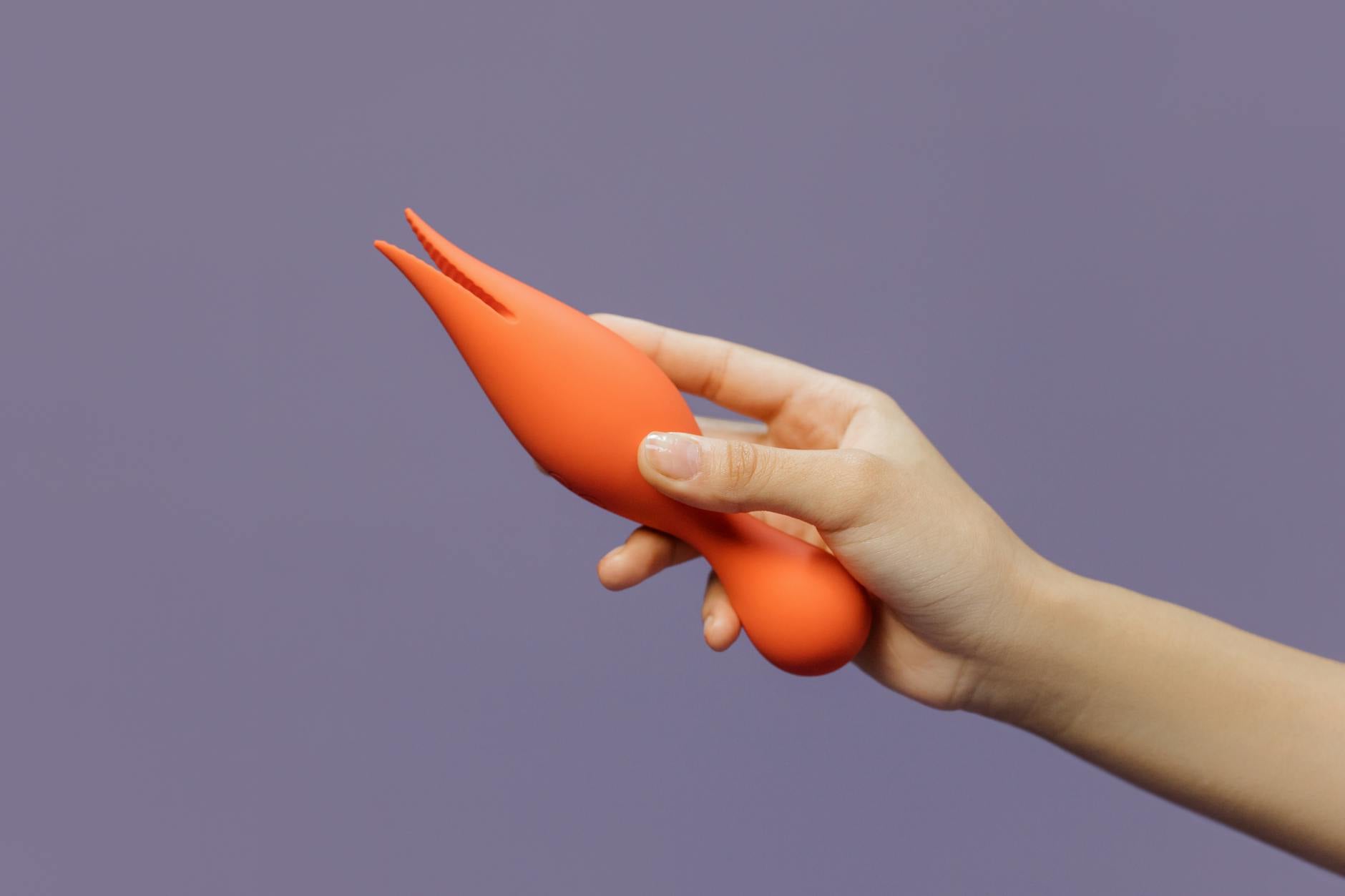
Why Lemon Vibrators Feel Different After Birth Control Changes
How hormonal shifts from starting or stopping contraception affect sensitivity, arousal speed, and what your clitoral vibrator actually does to your body.
You switched pills. Or you quit hormonal birth control entirely. Or you got the implant. And suddenly your lemon vibrator feels... different. Maybe too intense. Maybe underwhelming. Maybe the same sensation that used to get you there in five minutes now takes fifteen, or it doesn't work at all.
Here's what's actually happening: your hormones shifted, and that changes how your nervous system responds to stimulation. Understanding this connection matters because it helps you troubleshoot instead of assuming something's broken.
Let's start with the basics. Hormonal contraceptives (pills, patches, rings, implants) suppress or regulate your body's natural estrogen and progesterone cycles. This is the whole point. But those hormones don't just control fertility. They directly affect blood flow to genital tissue, nerve sensitivity, natural lubrication, and how quickly your arousal builds.
When you're on combined hormonal birth control (estrogen plus progestin), your hormone levels stay relatively flat. Your body doesn't experience the natural dips and peaks that happen across your cycle. This flatness can dull sensation. Many people on hormonal contraceptives report that their pleasure feels muted compared to off-control baseline.
Progestin-only methods (the mini-pill, implant, shot) keep estrogen suppressed but affect progesterone differently. Some people on progestin-only methods experience sharper sensitivity spikes and more variable arousal across their cycle. Others feel consistently blunted.
The unpredictability is the frustrating part. Your lemon clitoral vibrator worked brilliantly for two years. Then you switched pills. Now it doesn't. That disconnect isn't psychological. It's hormonal.
Stopping hormonal contraception is like turning a dimmer switch back up. Your natural estrogen and progesterone return. Blood flow to genital tissue increases. Lubrication comes back. Nerve sensitivity often sharpens dramatically.
Some people describe this as a return to baseline. Others describe it as discovering pleasure for the first time, because they started hormonal contraception as teenagers and have no memory of their pre-pill body.
The timeline matters. It takes about one to three months for your cycle to fully regulate after stopping hormonal birth control. During those three months, sensitivity is often wildly inconsistent. Day 8 of your reborn cycle might feel amazing. Day 12 might feel flat. Your lemon vibrator might be perfect one week and make you want to throw it across the room the next.
This is normal. Your body is relearning its own rhythm.
Here's the practical problem: you've been using your lemon vibrator on pattern 4 for the last year and a half. It worked. Then you changed your birth control method and pattern 4 now feels like being smacked in the face with a tennis racket.
Your tissue sensitivity shifted. The suction intensity that felt perfectly calibrated now overstimulates. Or, conversely, it feels barely noticeable and you're frustrated that your lemon sexual toy suddenly seems useless.
When you change birth control, treat your vibrator settings like you're starting over. Go back to patterns 1 and 2. Spend a week exploring lower-intensity options before climbing back to what used to work. This isn't about retraining your body. It's about matching the tool to your body's current neurology.
Hormonal birth control doesn't just affect your nervous system. It changes the quantity and consistency of natural lubrication your body produces.
Many people on hormonal contraceptives report less natural wetness, even when aroused. This isn't dysfunction. It's a direct hormonal effect. Less lubrication changes the friction mechanics when you use a lemon clitoral vibrator. The suction pulls against drier tissue, which can feel uncomfortable or even painful.
When you stop hormonal birth control, lubrication often bounces back. Your body now produces more natural lubrication, which changes how the suction stimulation feels. It might feel smoother. It might feel slippery in a way that's actually less pleasurable if you prefer more friction.
The fix is simple: don't wait for natural lubrication to reach baseline before using your vibrator. Water-based lubricant is your friend during any birth control transition. It's not a workaround for broken tissue. It's a tool that lets you keep exploring pleasure while your hormones settle. Most people using hello nancy's lemon suction toys find that a quality water-based lube unlocks sensation they didn't know was available.
One of the most common complaints I hear after a birth control change is that getting aroused takes forever. Your lemon vibrator used to work fast. Now you're sitting there wondering if you've become broken, when actually your baseline arousal has just shifted.
Hormonal contraceptives suppress testosterone (yes, people with ovaries make testosterone, and it's crucial for desire and quick arousal). When you're on combined hormonal birth control, testosterone is consistently low. Your arousal might feel slow, or you might not feel spontaneous desire at all.
Stop the hormonal contraception. Testosterone returns. Arousal gets faster. Spontaneous desire returns. But this takes time. The full rebound can take three to six months depending on the method you used.
During the adjustment period, don't expect your lemon vibrator to work on demand like it did before. Build in longer warm-up time. Start with external stimulation before moving to direct clitoral suction. Give your body the mental and physical runway it needs to activate.
If arousal stays slow or doesn't improve after six months off hormonal contraception, there's usually another factor at play (stress, relationship tension, medical issues). That's worth discussing with a healthcare provider.
Switching to a different hormonal contraceptive can sometimes make sensation feel duller. You're hoping the new pill will work the same way as the old one. Instead, you're left feeling less pleasure, less lubrication, and less spontaneous desire.
This often happens because not all hormonal contraceptives are created equal. Some pills have higher estrogen. Some have different progestins. Some people's bodies respond brilliantly to one hormonal profile and not at all to another.
If you switch birth control and pleasure consistently feels diminished after three months of adjustment, mention it to your prescriber. Different pills exist. So do non-hormonal alternatives. You don't have to accept diminished pleasure as the cost of contraception.
In the meantime, your lemon clitoral vibrator is still a powerful tool. If lower intensity settings aren't delivering, try extending warm-up time. Try lubricant. Try using your vibrator at a different point in your cycle if your contraceptive still allows natural cycle variation.
Birth control changes often happen at times of transition. You start a new pill. You break up and don't need contraception. You get partnered and switch methods. That relationship shift can pile emotional change on top of hormonal change, and pleasure gets tangled with both.
If you're experiencing pleasure shifts after a birth control change and you have a partner, talking about it helps. Not because you need to fix anything immediately, but because your partner can't diagnose why you suddenly need different touch, different pacing, or different stimulation. If they don't know about the birth control shift, they might internalize the change as rejection.
Honestly though, your pleasure isn't their responsibility to fix. It's your body and your lemon vibrator. Use both to explore what works now.
When you change birth control, expect a full reboot. Your body might not return to previous pleasure baseline for three to six months. That sounds long. It is.
Week one to two: chaos. You might feel nothing. You might feel everything. Your emotions might be erratic because hormones affect mood directly.
Week three to eight: gradual shift. Some days are better than others. Your sensitivity probably feels inconsistent. Your arousal speed is returning but not yet normal.
Month three to six: mostly settled. Your body is running on the new hormonal profile. Pleasure response is becoming predictable again. You've figured out which vibrator settings work and which don't.
If you're past month six and pleasure still feels wildly muted or inconsistent, it might not be just the birth control. Stress, relationship shifts, medical conditions, and medication side effects all change pleasure.
If pleasure was normal before the birth control change and remains significantly diminished after four months, schedule a gynecology appointment. Mention the timing. A good provider will recognize the connection and help you explore whether this particular contraceptive is right for you.
If you experience pain during sex or masturbation (not just numbness, but actual sharp or burning pain), don't wait four months. Pain is signal. It usually means something needs adjustment.
And if you're feeling completely shut down emotionally or psychologically since the birth control change, a therapist might be more useful than another gynecologist. Hormones affect mood and desire in complex ways.
No. Some people don't notice any shift. Others describe it as life-altering. Genetics, baseline sensitivity, and how your body metabolizes hormones all matter. You won't know until you try.
Most likely, yes. But "normal" might not mean what you think. If you've been on hormonal contraception since age 18, you might not have a clear memory of your pre-pill pleasure baseline. What returns might feel like discovering sensitivity for the first time. That discovery takes adjustment.
Probably not during transition. Once your hormones stabilize on the new method (about three months), you might find the same settings work again. But expect to recalibrate. This is why having options like a clitoral vibrator with multiple intensity patterns is useful.
No. If desire drops when you start hormonal contraception and doesn't return after four months, a different pill or method might work better. Your pleasure matters. You don't have to accept diminished desire as standard.
Yes, especially if you share a bed with them. They might notice changes in your arousal speed or desire. Knowing it's hormonal, not relational, helps you both stay connected. Your lemon sexual toys can be part of solo exploration during adjustment, and that's completely normal.
Anywhere from four weeks to six months. The wide range depends on which method you used (pills clear faster than implants), how long you were on it, and individual metabolism. Track your pleasure response week to week. You'll notice the shift happening even if it's gradual.
Your body is smart. It adapts. When you switch birth control, your pleasure isn't broken. It's just learning a new hormonal landscape. Give yourself time, use lower intensity settings while you adjust, and remember that your lemon clitoral vibrator is a tool designed to work across different bodies and different hormonal states. The same tool that's a perfect fit one month might need tweaking the next. That's not failure. That's just how bodies work.